

Are your customers demanding product sustainability data
but you can’t deliver reliable results?
With the greenable platform for Product Sustainability, you can create a structured database for reliable PCFs, Scope 3, LCA, PPWR, and the Digital Product Passport.
Structure product data once and use it multiple times
Product Carbon Footprint
Calculate reliable Product Carbon Footprints based on structured data on suppliers, materials, processes, and products
Digital Product Passport
Create digital product passports directly from your product data and make them available in a structured format for different roles.
PPWR & Packaging
Organize packaging, material, and documentation data for PPWR-related requirements and generate proof of compliance.
Scope 3 Data
Use PCF data covering the entire life cycle for product-related Scope 3 analyses.
Data Exchange
Share PCF data and company certificates in data rooms such as Catena-X.
Life Cycle Assessment
Expand PCF to LCA and include additional environmental impacts and life cycle stages.
Companies That Already Work With Us
greenable helps companies organize product-related sustainability data in a structured way and
make it usable for customer requirements, PCF, DPP, and other needs










From your first PCF to a scalable data foundation for the Digital Product Passport
Sustainability requirements rarely fail because of the goal itself, but because of the data:

Scattered Product Data
Your product data is scattered across Excel files, ERP systems, and emails. Not sure where to start?

Missing Supplier Data
The necessary material information is held by your suppliers, whom you have not yet contacted, or you have received data that is unusable. You do not know how to fill in the data gaps.

Growing Requirements
PCF, Scope 3, LCA, DPP, and PPWR have different requirements but all rely on the same foundation: structured, reusable product data.
Centralize and Reuse Product Data
Instead of processing each requirement individually, centralize and structure product, process, and supplier data once, and use it for PCF, Scope 3, LCA, digital product passports, PPWR, and upcoming regulatory issues and requirements.
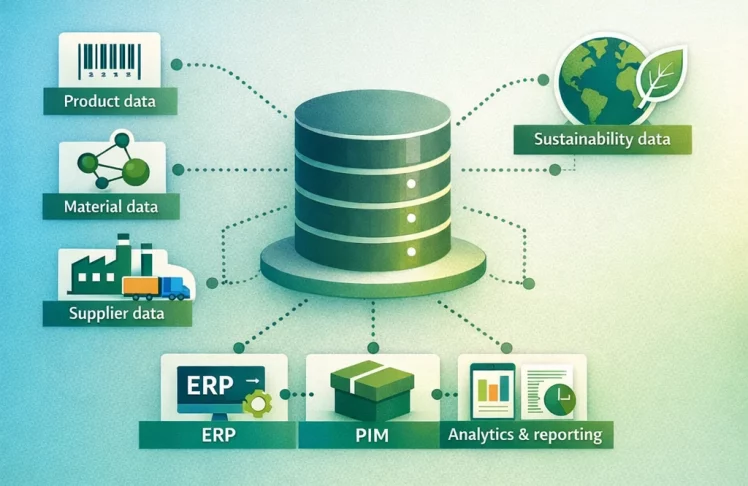
Centralize Product Data
Consolidate product, material, and supplier data into a structured database instead of using Excel, ERP systems, and standalone solutions. This lays the foundation for reliable calculations and reusable product information.
- A consistent data structure across all products, locations, and requirements

Systematically Collection and Integration of Supplier Data
Request relevant material, emissions, and verification data from suppliers in a structured manner and make this data usable for PCF, PPWR, Scope 3, LCA, and DPP.
- Standardized supplier requests and traceable data quality

Calculate, Deliver, and Reuse Results
Calculate PCFs, LCA results, Scope 3 analyses, and PPWR-relevant metrics directly based on your structured product, material, process, and supplier data.
- A single data model for various calculations and analyses
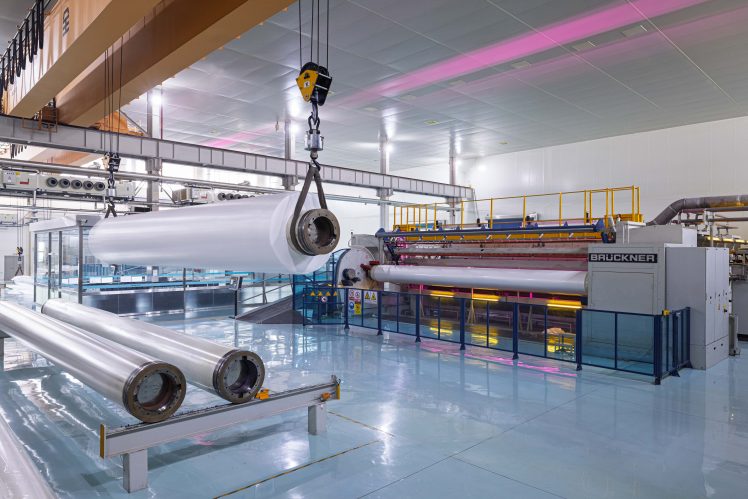
Product Carbon Footprint and Scope 3.1 at Brückner Maschinenbau GmbH
Challenge: Calculating Product Carbon Footprints for complex machine structures with highly fragmented data and a large number of components.
Solution: Establishing a central data foundation for product, material, and supplier data to enable scalable PCF calculations.
Result: Significant reduction in manual effort and the ability to reuse established processes and product-specific results for Scope 3.1 and future PCF calculations.
What our delighted champions say:
Product experts from various industries share their experiences.

Jacqueline Orwat
Sustainability Expert, thyssenkrupp Gerlach GmbH
‘With greenable, I get the all-round carefree package. The software is user-friendly and its neat and appealing structure makes it easy to work with. During our collaboration over the last few months, we have built up a close relationship. For me, this closeness makes the decisive difference and the success of our collaboration.’

Jonas Hofmann
Supply Chain Manager QM & ESG, Helbako GmbH
‘The decision to use greenable’s software to calculate the carbon footprint of our products has proven to be very positive. The user-friendly PCF tool, the automated functions and the fast personal support have accelerated our process and helped us to calculate the first carbon footprints quickly and efficiently.’

Jörg Heims
Executive Director Supply Chain Management, Gebr. Pfeiffer SE
‘Thanks to the combination of expert advice and user-friendly software, we got off to the best possible start with the carbon footprinting of our products. We look forward to further collaboration and joint projects with greenable.’

Daniel Siemen
Purchasing and Process Management, mann Objecta GmbH & Co. KG
‘From the very first discussions, the basis for a professional collaboration was in place. A high level of expertise and a great willingness to innovate could be felt! The very complex topic is broken down into an absolutely user-friendly interface that can be implemented by any user. The project support is great and the response time to problems is extremely fast.’
A strong network for product sustainability







Ready to take a structured approach?
We’ll assess your current situation and show you how to implement PCFs and other requirements in a structured and scalable way.
Frequently asked questions
Regulation, terminology and details about our tool – find the answers to your questions here.
A product sustainability platform helps companies centrally collect and calculate product-related sustainability data and make it available for various purposes, such as PCF, LCA, Scope 3, PPWR, digital product passports, and data exchange.
With greenable, you can organize product, material, process, supplier, and sustainability data. This includes, among other things, bills of materials, material information, emission factors, transportation data, packaging data, supporting documentation, and calculated environmental metrics.
The database can be used for a variety of purposes: product carbon footprints, life cycle assessments, Scope 3 analyses, PPWR-relevant packaging data, digital product passports, and standardized data exchange in data hubs such as Catena-X.
Yes. Many companies start with existing product, material, or supplier data and gradually fill in the missing information. greenable helps identify data gaps and continuously improve the database.
Relevant material, emissions, packaging, or documentation data can be requested from suppliers in a structured format and reused in greenable. This way, supplier data is not only collected but can also be used directly for calculations and analyses.
Many requirements are based on the same product, material, process, and supplier data. Product Carbon Footprints and LCA provide environmental metrics, Scope 3 assessments use product-related emissions data, and Digital Product Passports make selected product and sustainability information available in a structured format.
Yes. greenable helps you organize packaging, material, supplier, and verification data in a structured way and make it usable for PPWR-related requirements, customer inquiries, PCF, LCA, and other documentation processes.
greenable is a software platform for product-related sustainability data. In addition, we provide support with data structure, methodology, onboarding, and implementation so that companies can achieve reliable results more quickly.