Dr.-Ing. Patrick Kölsch
CEO & Co-Founder


With greenable, you can capture, organize, and publish product-related data for the Digital Product Passport—ranging from product and material information to sustainability data such as PCF and LCA.

Product, material, and component data is often stored in ERP and PLM systems, Excel files, or individual departments and is not consistently linked to sustainability data.

DPP-related information changes throughout the product lifecycle and must be maintained with clear data provenance, quality, and versioning.

Customers, partners, and platforms need structured product information that can be provided in a targeted manner, not in static Excel or PDF files.

greenable helps you collect DPP-relevant product, material, supplier, and sustainability data in a structured manner, manage it centrally, and make it available for Digital Product Passports. This creates a solution that allows you not only to collect product-related information, but also to keep it up to date, verify it, and share it in a targeted manner.
Capture product, material, component, supplier, and sustainability data in a structured manner within a central solution:
Maintain, verify, and version DPP-relevant information in a traceable manner across products, variants, and supply chains:
Provide structured product information as a Digital Product Passport or for platforms, interfaces, and customer requirements:
The specific requirements depend on the product group, industry, and regulatory framework. greenable helps you map out different data categories in a structured way and make them usable for the Digital Product Passport.
Product name, item number, model, serial number, manufacturer information, technical specifications, and other basic data.

Material composition, components, critical raw materials, recycled content, and origin information.

Product Carbon Footprint/Environmental Footprint/LCA, environmental impacts, energy consumption, and other environmental metrics.

Supplier information, documentation, certificates, data sources, and additional information about the supply chain

Information on repair, reuse, recyclability, disassembly, and end-of-life.

Declarations of conformity, test reports, certificates, product documentation, and other relevant supporting evidence.
greenable supports the entire process, from data collection to the provision of DPP-relevant information.

Our DPP software enables product information to be organized in a structured manner into submodels and data categories. This allows for the flexible mapping of both existing standards and new regulatory requirements. Companies can define their own data fields and manage regulatory information—such as for PPWR or future ESPR requirements—directly within the Digital Product Passport.
Benefits
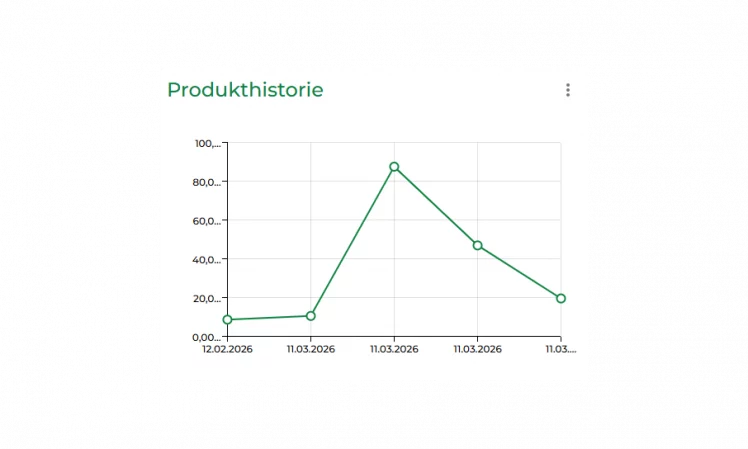
All changes to product data are versioned and documented in a traceable manner. This allows for historical tracking of changes to material data, emission values, or regulatory information at any time.
Benefits
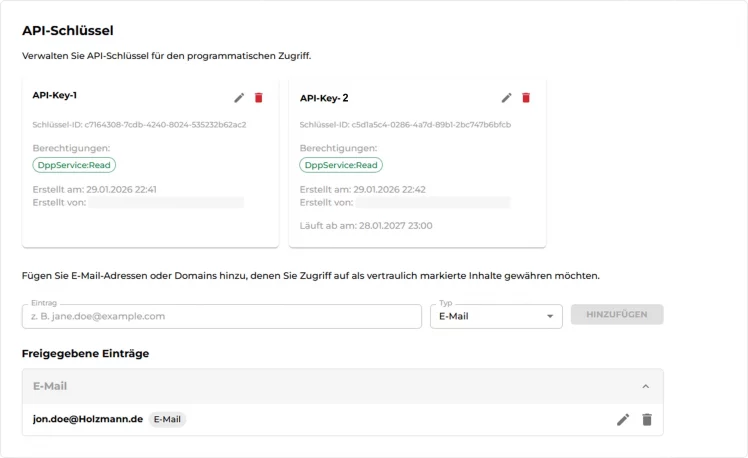
Determine which data within your Digital Product Passport is public, confidential, or accessible only to specific business partners. Through role-based permissions and API keys, applications and partners can access specific data areas in a targeted manner.
Benefits:
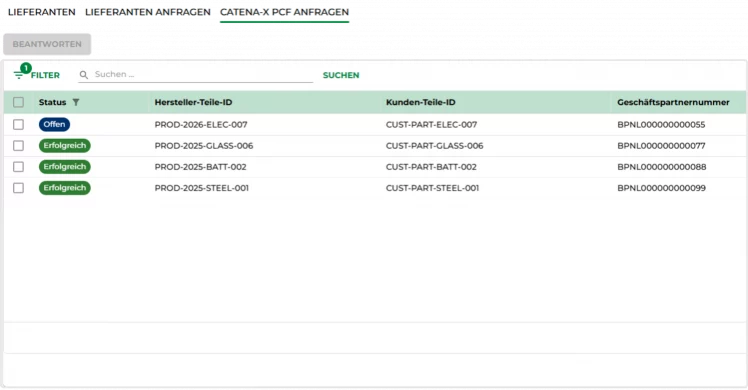
Our platform supports the exchange of product and sustainability data via industrial data rooms. Inquiries regarding PCF or product information from networks such as Catena-X can be processed and answered directly.
Benefits:

Textiles, furniture, mattresses, tires, and intermediate products such as iron, steel, and aluminum are a particular focus of the ESPR work plan. For these groups, product-specific data on materials, recyclability, environmental impacts, and supporting documentation are particularly relevant.

Complex products, long lifecycles, and numerous components make structured product data particularly important. greenable helps make technical information, materials, sustainability data, and supporting documentation available for digital product passports.

Automotive companies are under increasing pressure to provide product-related sustainability data throughout the supply chain. greenable provides support for PCF, material, and product data, as well as for integration into data exchange processes.
With greenable, you can create and manage Digital Product Passports based on structured product, material, supplier, and sustainability data. This allows you to reduce manual coordination, keep information up to date, and consistently provide DPP-relevant data to customers, partners, and platforms.


We’ll show you how to systematically collect and manage product, material, supplier, and sustainability data and make it available as a Digital Product Passport.

CEO & Co-Founder
Find answers to your questions about regulations, terminology and details about the DPP here.
A DPP is a digital representation containing detailed information about a product’s entire life cycle. This information should be both understandable and trustworthy. It includes details of materials and manufacturing processes, the use of raw materials and recycling options, and the product’s carbon footprint.
When the ESPR comes into force in 2027, the introduction of the digital product passport will become mandatory. As part of the Green Deal and the Circular Economy Action Plan, the European Union has agreed to introduce measures to promote the circular economy.
The aim is to extend the life cycle of products, promote energy and resource efficiency, and advance the circular economy, making more sustainable products the norm. The Ecodesign Regulation is closely linked to the goals of the EU’s Green Deal, which aims to make the economy climate-neutral by 2050. A key part of the Green Deal involves strengthening the circular economy, whereby materials and resources remain in the economic cycle for as long as possible.
The DPP is a key part of this strategy and will be introduced for more than 31 product categories on a mandatory basis. These include batteries (EU Battery Regulation), textiles, plastics, packaging, furniture, aluminium, steel and electronics, in particular. Companies must provide all the necessary product data and integrate it into the digital product passport.